Fur Everywhere Until You Try a Pet Grooming Kit with Vacuum
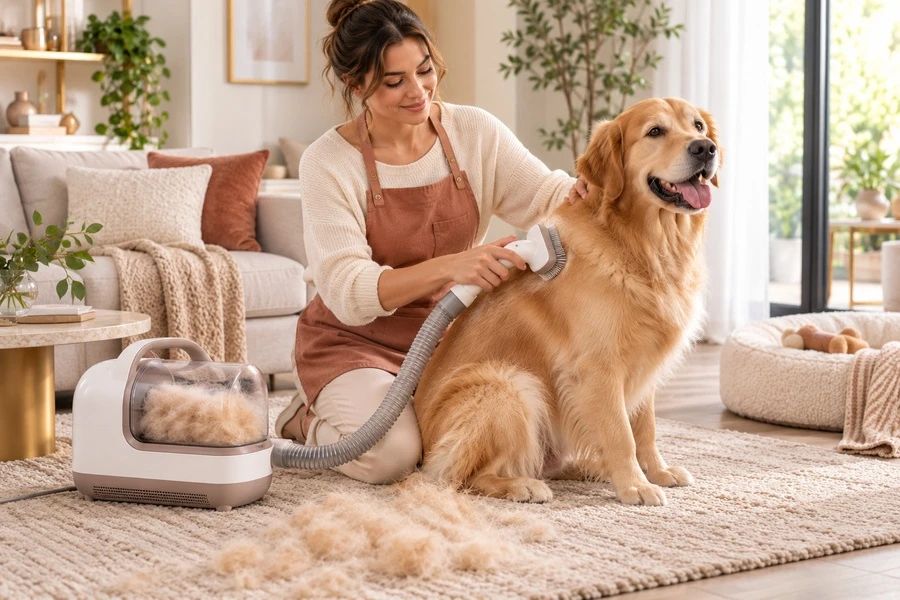
Grooming a shedding animal at home traditionally means choosing between a fur covered room and a trip to a professional salon. A pet grooming kit with vacuum removes that choice by drawing loose hair directly into a sealed container as the clipper or brush works. The change sounds minor until you finish a full grooming session and find the floor still clean. Understanding how the suction system works helps you use it effectively rather than fighting against it.
How a Pet Grooming Kit with Vacuum Contains the Mess
Each attachment connects to a flexible hose that runs to a motorized unit generating continuous airflow. Hair released by cutting or brushing enters that airstream immediately instead of drifting onto furniture, clothing, and floors. The container collects everything for disposal at the end of the session in a single step. Capture at the source eliminates the cleanup that normally follows grooming. The difference becomes obvious during shedding season, when a single session would previously have covered an entire room.
Households with allergy sufferers benefit most from this arrangement, since airborne dander causes more reaction than settled hair. An effective pet hair vacuum system reduces the quantity circulating through the room during and after grooming.
Introducing Suction to a Cautious Animal
Vacuum noise frightens many pets initially, which makes the introduction period more important than any technical specification. Running the unit in the same room for several short sessions without touching the animal builds tolerance gradually. Rewarding calm behavior during that exposure creates a positive association before any grooming begins. Patience during the first week determines the experience for years afterward. Animals introduced carefully often begin to associate the sound with attention rather than with threat.
Starting with the least sensitive areas such as the back and shoulders helps enormously once contact begins. Suction levels that can be reduced during early sessions make the process gentler. Selecting dog and cat grooming tools with adjustable settings gives you room to adapt to individual temperament.
Choosing a Pet Grooming Kit with Vacuum for Your Animal
Coat type should drive the selection, since a short haired cat and a double coated dog need entirely different attachments. Deshedding heads with metal teeth reach the undercoat effectively, while brush attachments suit surface grooming and daily maintenance. Clipper heads matter for breeds requiring regular trimming rather than only brushing. Matching the tools to the coat prevents both discomfort and disappointing results.
Container capacity influences how often you interrupt a session, which matters for large breeds producing substantial volume. A deshedding brush attachment paired with adequate collection capacity handles a full grooming without stopping. Readers focused on clipping specifically can review our overview of multi attachment clipper systems.
Session Length and Animal Comfort
Grooming tolerance varies enormously between individuals, and pushing beyond an animal’s limit creates resistance that persists into future sessions. Fifteen minutes usually represents a comfortable maximum for most pets, particularly during the first months. Splitting a full groom across two or three shorter sessions produces better results with less stress. Frequency beats duration in home grooming. Two short sessions across a weekend usually achieve more than one prolonged attempt on a restless animal.
Watching for early signs of discomfort prevents the escalation that ends in struggle. Ears flattening, tail movement, and attempts to leave all indicate that a break is due. Ending on a calm note preserves cooperation for next time.
Maintaining a Pet Grooming Kit with Vacuum
Suction performance drops noticeably as hair accumulates in the filter, and most complaints about weak airflow trace directly to neglected maintenance. Emptying the container after each session and rinsing the filter weekly restores full function. Blades and attachment teeth need brushing free of hair and occasional oiling to cut cleanly. Ten minutes of care preserves performance indefinitely. Replacing filters on the recommended schedule maintains suction that would otherwise decline gradually without anyone noticing.
Hose inspection matters too, since compacted hair inside the tube restricts airflow invisibly. Running a flexible brush through it periodically clears any blockage. An easy to clean grooming device makes that routine quick enough that people actually do it.
What a Pet Grooming Kit with Vacuum Saves Over a Year
Professional grooming for a medium sized dog typically occurs every six to eight weeks throughout the year. Handling maintenance grooming at home between those appointments extends the interval considerably and reduces annual cost. Some owners transition to home grooming entirely, while others keep occasional professional visits for complex cuts. Either approach produces meaningful savings across the animal’s life.
Time savings accompany the financial ones, since travel and waiting often exceed the grooming itself. Readers concerned about noise sensitivity in their animal can continue with our notes on quieter clippers for anxious pets. Convenience determines whether grooming happens on schedule.