Your Sofa Survives Because of a Cat Tree Scratcher Tower
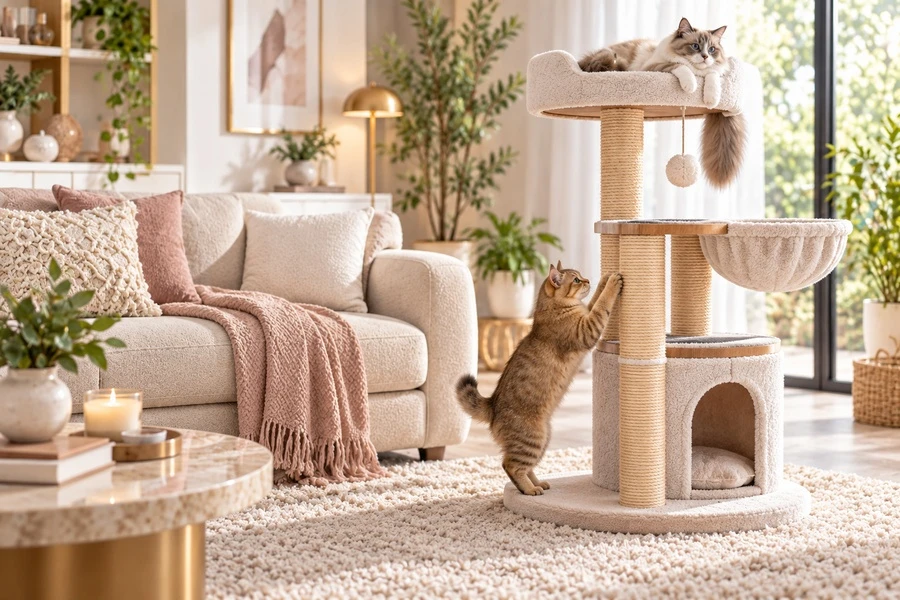
Furniture damage remains the most common complaint among cat owners, and punishment never solves it because scratching serves several biological purposes at once. A cat tree scratcher tower redirects that behavior toward a surface designed for it, which protects upholstery far more effectively than deterrent sprays. Cats scratch to maintain their claws, stretch their spine, and mark territory visually and chemically. Providing a better option works because it satisfies all three needs simultaneously.
Why a Cat Tree Scratcher Tower Beats Deterrents
Blocking access to a sofa arm simply moves the behavior to another piece of furniture, since the underlying need remains unmet. Offering a superior alternative changes the calculation for the animal, particularly when that alternative sits in a preferred location. Cats favor surfaces that resist their weight and allow a full body stretch, which most household furniture provides only accidentally. Meeting those criteria deliberately makes the choice obvious to the animal. Cats rarely abandon a surface that works, which is why a successful post usually stays in service for years.
Placement determines whether redirection succeeds, because cats scratch near sleeping areas and along routes they patrol. Positioning cat play furniture beside the sofa rather than in a distant corner produces results within days. Convenience matters to cats exactly as it does to people.
Height, Stability, and Feline Confidence
Cats evaluate elevated positions constantly because height provides safety, visibility, and control over their environment. A tall structure gives an indoor animal access to that vertical dimension, which flat rooms otherwise deny entirely. Nervous cats in particular benefit from a retreat above floor level where dogs and children cannot reach. Confidence improves measurably when a secure high position exists.
Stability determines whether the animal trusts the structure at all, since a single wobble during a jump teaches avoidance permanently. A wide, heavy stable cat tower base prevents that rocking motion during enthusiastic climbing. Weight at the bottom matters more than any other structural feature. Testing stability by pressing firmly on the highest platform reveals problems before the animal discovers them.
Choosing a Cat Tree Scratcher Tower for Your Cat
Individual preference varies more than most owners expect, so observation beats guesswork when selecting a design. Cats that currently scratch vertical surfaces need tall posts, while those working on carpets prefer horizontal or angled pads. Age influences the choice as well, since kittens climb constantly and older animals need lower platforms with easier access. Matching the structure to the animal prevents an expensive object from being ignored.
Size should account for the largest cat in the household, because platforms that feel cramped get abandoned regardless of their height. Selecting multi level cat furniture with generously sized resting spots keeps larger breeds comfortable. Readers with several animals can review the layout considerations in our overview of vertical space for indoor cats.
Materials That Withstand Daily Use
Scratching surfaces face concentrated force from sharp claws thousands of times, which destroys inadequate materials within months. Tightly wound natural fiber rope resists that abrasion while providing the resistance cats instinctively prefer. Carpet covered posts confuse the animal by resembling floor coverings you would rather protect. Material selection influences both durability and behavior.
Fabric on the platforms takes different punishment, mostly from claws kneading during rest and from accumulated hair. Removable covers simplify cleaning considerably and extend the appearance of the structure. A genuinely durable cat scratching surface remains functional long after cheaper alternatives have unraveled.
Introducing a Cat Tree Scratcher Tower Successfully
New objects trigger caution in most cats, so the introduction deserves the same patience you would give any change in territory. Placing the structure in an area the animal already uses removes the location as a source of hesitation. Rubbing a small amount of catnip into the posts encourages initial contact without forcing interaction. Most cats investigate thoroughly within a day.
Rewarding use during the first week establishes the association quickly, and play sessions around the base accelerate acceptance. Avoid lifting the cat onto the platforms, since forced contact often produces the opposite result. Voluntary discovery creates lasting preference. Most owners see consistent use within the first week whenever the location suits the animal.
Long Term Value of a Cat Tree Scratcher Tower
Replacement cost for a damaged sofa exceeds the price of dedicated equipment by a wide margin, which makes the economics straightforward. A cat tree scratcher tower also reduces behavioral problems linked to boredom, including excessive vocalization and nighttime activity. Indoor animals with vertical territory show fewer stress related behaviors according to consistent veterinary observation. Prevention costs less than correction in nearly every case.
Durability determines how long that value lasts, so replaceable posts and covers extend the useful life considerably. Readers focused specifically on scratching surfaces can continue with our notes on natural fiber posts and claw maintenance. Equipment that survives years of daily use justifies careful selection.