Design Meets Hygiene in the Smart Enclosed Litter Box
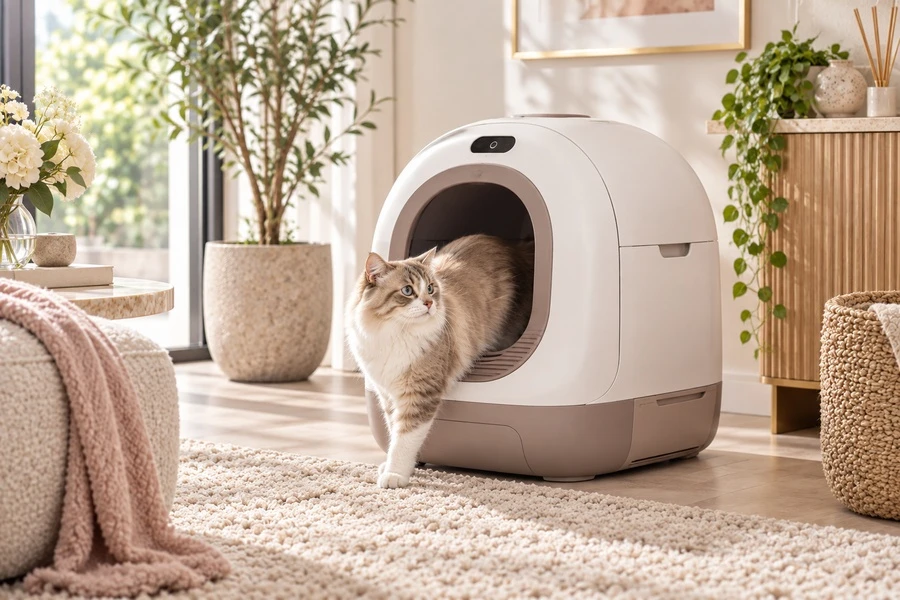
Pet equipment traditionally looked like pet equipment, which forced owners to hide it in bathrooms, utility rooms, and other inconvenient corners. A smart enclosed litter box changes that calculation by combining a contained structure with a form that sits acceptably in a visible part of the home. Placement flexibility matters because cats prefer accessible locations rather than the far end of a basement. Solving the appearance problem therefore solves a practical one as well.
Why a Smart Enclosed Litter Box Fits Modern Homes
Apartments rarely include a spare room for animal facilities, so the equipment must coexist with furniture and daily circulation. Enclosed forms with neutral surfaces read as small appliances rather than obvious pet items, which makes hallway or living room placement acceptable. Cats benefit from that visibility because they prefer quiet but reachable locations near household activity. Compromise disappears when the object stops looking out of place. Owners who position the unit in a visible room also notice problems sooner, which keeps maintenance on schedule.
Material choice supports the effect considerably, since matte finishes and simple geometry integrate better than molded plastic in bright colors. A well designed modern pet appliance should look deliberate beside your existing furniture.
Containment and What Enclosure Actually Achieves
Open trays allow litter to scatter during digging and permit odor to circulate freely through the room. Full enclosure addresses both problems simultaneously by containing the granules and restricting airflow to a single controlled opening. Filters positioned in that airflow path capture much of the remaining odor before it escapes. Physical containment outperforms chemical masking in every measurable way.
Privacy provides an additional benefit that owners rarely anticipate. Many cats prefer covered spaces for toileting, and an enclosed cat toilet matches that instinct more closely than an exposed tray. Animals that feel secure use their facilities more consistently. Nervous cats in particular prefer a covered space where nothing can surprise them from behind while they are occupied.
Choosing a Smart Enclosed Litter Box for Your Layout
Footprint matters more than total volume in most homes, so measure the intended position including clearance for the waste drawer to open. Units placed against a wall need rear clearance for ventilation and cable routing where power is required. Corners work well because they provide two solid sides that reduce the perceived intrusion into the room. Careful measurement prevents the common problem of a drawer that cannot open fully.
Flooring beneath the unit deserves thought as well, since hard surfaces simplify cleaning enormously compared with carpet. Placing a washable mat underneath protects the floor and catches stray granules. Readers running several animals through one unit can review the capacity discussion in our overview of shared units in multi cat households.
Connectivity Features That Earn Their Place
Smart functionality succeeds when it answers questions owners genuinely have rather than adding complexity for its own sake. Usage logs, waste level alerts, and remote cycle control all solve real problems in daily ownership. Notifications about a full compartment prevent the situation where a cat refuses the unit because nobody noticed. Useful features get used, and decorative ones get ignored within a month.
Reliability of the connection matters as much as the features themselves, because an unstable link produces frustration rather than convenience. Systems offering thorough safety sensor technology alongside monitoring provide reassurance when nobody is home. Remote visibility changes how comfortable owners feel about longer absences.
Cleaning a Smart Enclosed Litter Box Without Frustration
Enclosure improves hygiene between cleanings while making the periodic deep clean slightly more involved. Models with removable panels and a drawer that slides out completely reduce that effort considerably. Smooth internal surfaces without deep grooves prevent residue from lodging where a cloth cannot reach. Design decisions determine whether weekly maintenance takes five minutes or twenty. Checking how the drawer detaches before purchase reveals more about daily convenience than any specification list.
Establishing a routine keeps the task minimal, and most owners settle into emptying the drawer weekly with a fuller clean monthly. Filters need replacement every few months depending on household size. Choosing an easy to clean litter unit keeps that schedule realistic rather than aspirational.
Long Term Value of a Smart Enclosed Litter Box
Durability determines whether the initial cost proves reasonable, and the moving components carry most of the risk. Sealed motors, replaceable filters, and available spare parts extend service life well beyond the warranty period. Checking parts availability before purchase protects against an early replacement caused by one failed component. Repairable equipment always costs less across a decade.
Value also appears in reduced litter consumption and fewer cleaning products, both of which accumulate quietly over years. Readers wanting the fundamentals of automatic operation can continue with our discussion of daily life with automated cleaning. Equipment used every day deserves careful selection once.