Two Cats, One Automatic Litter Box for Multi Cat Homes
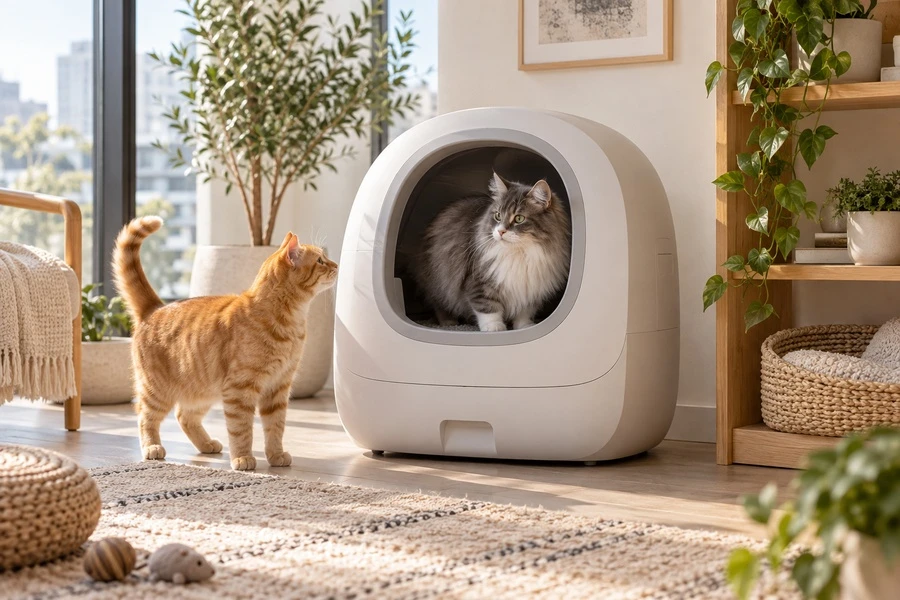
Adding a second cat multiplies litter maintenance by considerably more than two, because shared trays require cleaning after every visit to stay acceptable to both animals. An automatic litter box for multi cat homes addresses that problem by resetting the surface after each use rather than accumulating waste between manual scoops. Cats are particular about cleanliness, and a soiled tray remains the leading cause of household toileting accidents. Solving the hygiene problem usually solves the behavioral one as well.
Why an Automatic Litter Box for Multi Cat Homes Changes Behavior
Territorial animals avoid areas marked by another individual, which explains why the second cat in a household frequently refuses a recently used tray. Automatic separation removes that evidence within minutes, presenting each animal with a clean surface regardless of who visited previously. Avoidance behavior often disappears within a fortnight of installation. Cleanliness after every visit matters more than total tray capacity. Owners who previously kept several trays around the home often find that one automated unit replaces all of them.
Stress reduction follows from the same mechanism, since competition over resources drives much of the tension between housemates. A reliable multi cat household solution reduces one recurring source of friction between animals sharing limited space.
Capacity Planning for an Automatic Litter Box for Multi Cat Homes
Waste volume scales directly with the number of cats, which makes the storage compartment the practical limit on maintenance intervals. A drawer suited to a single animal for a week fills in three days with two cats and less with three. Checking the stated capacity against your household prevents the unpleasant discovery of an overflowing compartment. Realistic planning keeps the system genuinely automatic.
Larger compartments extend intervals meaningfully, particularly for owners who travel or work long hours. A large capacity waste drawer allows several days of unattended operation without odor escaping into the room. Capacity planning matters more than any other specification in a busy household. Checking the drawer daily during the first fortnight establishes a realistic emptying schedule for your particular animals.
Sizing an Automatic Litter Box for Multi Cat Homes Correctly
Interior dimensions determine whether larger breeds can turn comfortably, and cramped units get abandoned regardless of how well they clean. Cats need enough room to circle, dig, and cover without contacting the walls, which requires more space than manufacturers sometimes assume. Measuring your largest animal from nose to tail base gives a useful minimum interior length. Comfort determines usage far more than technology does.
Entry height matters for kittens and older animals with reduced mobility, both of which struggle with high thresholds. Choosing a model with a lower step keeps the unit usable across the whole life of the animal. Readers new to automated systems can review the introduction process in our overview of automatic separation and daily routines.
Monitoring Health Through Usage Data
Frequency of visits provides genuinely useful clinical information, since changes in urination often signal urinary or kidney problems before other symptoms appear. Units that record individual visits give owners an early warning that a manual tray never could. Veterinarians frequently ask about litter habits, and precise data answers those questions better than estimation. Early detection improves outcomes in most feline urinary conditions.
Distinguishing between animals requires either separate identification or careful observation of the recorded patterns. An app controlled pet device makes reviewing that history practical rather than theoretical. Information collected passively tends to get used.
Placement and Tracking Control in Busy Homes
Litter scatter increases with the number of animals, so placement should account for the granules that inevitably leave the unit. Positioning the box on a hard floor with a textured mat in front captures most of the material before it reaches carpet. Avoid corridors and doorways where animals hurry, since rushed exits scatter litter further. Small placement decisions reduce cleaning noticeably.
Enclosed designs help considerably by containing the digging that produces most of the scatter. Units incorporating a low tracking litter design keep the surrounding floor cleaner without additional equipment. Location remains the cheapest improvement available. Moving the unit half a meter onto a hard surface often reduces tracked litter more than any additional accessory.
Maintaining an Automatic Litter Box for Multi Cat Homes
Weekly attention keeps the mechanism reliable, and the routine takes roughly five minutes once established. Emptying the waste compartment, wiping the interior surfaces, and topping up litter to the marked line covers ordinary maintenance. Sensors benefit from an occasional wipe because dust accumulation causes most false readings. Consistent light maintenance prevents the failures owners usually report.
Deep cleaning every few months restores the unit fully, particularly around the seals where residue accumulates. The mechanism behind automatic waste scooping only stays reliable when the hardware supporting it remains clean. Readers considering appearance and room integration can continue with our notes on enclosed units in visible living areas.