Choosing a 4 Person Camping Tent for Family Trips Without Regret
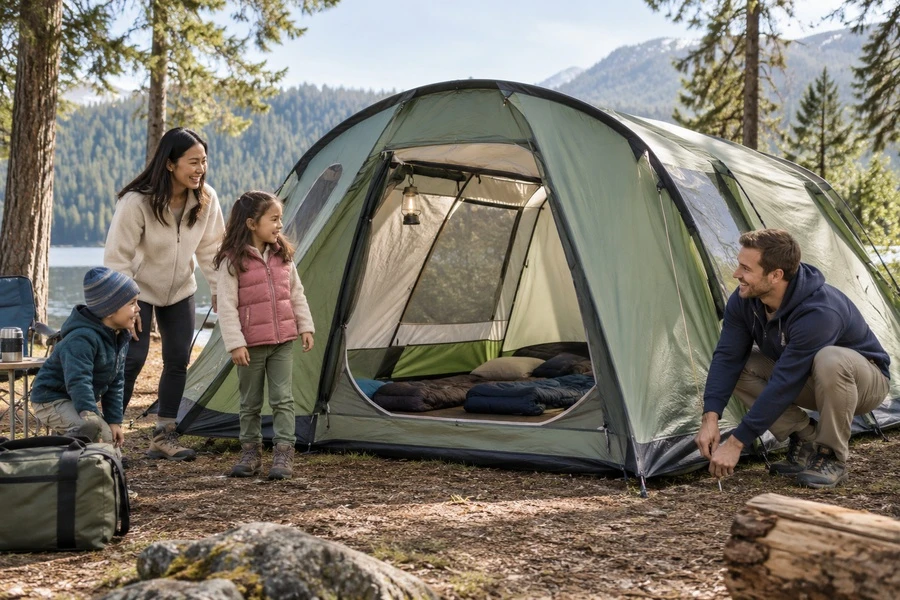
Family camping succeeds or fails on the first rainy evening, when four people, several bags, and a set of damp jackets must coexist inside one shelter. A 4 person camping tent for family trips needs to accommodate that reality rather than the optimistic scenario shown in catalog photographs. Capacity ratings across the industry describe sleeping bodies with no gear and no personal space whatsoever. Reading those numbers correctly is the first step toward a purchase you will not regret.
What a 4 Person Camping Tent for Family Trips Must Deliver
Real family use demands three things simultaneously, namely sleeping room, a covered area for wet equipment, and enough height for an adult to change clothes without contortion. Sleeping space alone leaves nowhere to store the bags, boots, and toys that accompany any trip with children. Shelters that separate those functions keep the sleeping area dry and the living area usable. Zoning matters as much indoors as it does at home. Families who separate wet gear from sleeping areas report far fewer arguments during long rainy afternoons.
Access design deserves attention as well, because children move in and out constantly regardless of the weather. Two entrances reduce the traffic across sleeping mats considerably. Selecting a tent with vestibule space gives everyone somewhere to remove muddy footwear before entering.
Setting Up a 4 Person Camping Tent for Family Trips After Dark
Family trips rarely begin on schedule, and the last hour of daylight disappears faster than anyone plans for. Shelters with color coded poles, pre attached sleeves, and a logical assembly order can be standing within fifteen minutes even in poor light. Complexity that seems manageable in the garden becomes genuinely difficult with tired children and a headlamp. Simplicity earns its value at exactly the wrong moment.
Practicing once before the first trip removes most of the risk regardless of design. A quick pitch tent design combined with one rehearsal usually means arriving late stops being a crisis. Confidence during setup improves the mood of the entire evening. Children also settle faster when the shelter appears quickly and the routine looks familiar to them.
Sizing a 4 Person Camping Tent for Family Trips Realistically
Measure your sleeping mats before trusting any capacity figure, since a standard adult mat occupies roughly sixty centimeters of width. Four mats therefore need about two hundred and forty centimeters, which many four person shelters do not actually provide once wall taper is considered. Families with young children often manage comfortably, while families with teenagers rarely do. Honest measurement prevents an uncomfortable discovery at the campsite.
Peak height influences comfort during long rainy afternoons more than floor area does. Standing room in at least part of the shelter makes an enormous difference to morale during bad weather. Readers who camp mainly in wet conditions can review our discussion of shelter performance in persistent rain before deciding.
Weight, Packed Size, and Transport
Car camping removes most weight concerns yet introduces a different constraint, namely trunk space shared with everything else the family brings. A shelter that packs into a compact cylinder leaves room for chairs, a cooler, and luggage. Bulk becomes the limiting factor long before mass does on a family trip. Packing the shelter last means it comes out first, which matters when rain starts during unloading. Measuring your trunk before buying saves an awkward roadside repack.
Storage at home follows the same logic across the eleven months when the shelter sits unused. A compact packed size tent fits a garage shelf rather than dominating it. Convenience between trips influences how often families actually go.
Keeping a 4 Person Camping Tent for Family Trips Dry Inside
Ground moisture causes more discomfort than rainfall in most family camping situations, particularly during spring and autumn. A bathtub style floor with the seam raised above ground level prevents water from tracking in at the edges. Adding a footprint underneath protects the fabric from abrasion and adds a further moisture barrier. Layers beneath the shelter matter as much as the roof above it.
Condensation control completes the picture, since four people generate substantial vapor overnight in a closed space. Keeping vents open even during rain prevents the interior from becoming damp by morning. A sealed tent floor combined with active ventilation keeps sleeping bags genuinely dry.
Making Family Camping Easier Over Time
Experienced families build systems rather than relying on memory, which is why a permanently packed camping box saves so much preparation time. Keeping pegs, a mallet, spare guy lines, and a repair patch with the shelter prevents the most common trip failures. Restocking that box immediately after returning means the next departure requires almost no planning. Small routines compound into easier trips.
Involving children in setup builds competence and reduces the parental workload within a couple of seasons. Readers looking at structural design and wind performance can continue with our overview of tunnel shelters in exposed conditions. Preparation turns camping from an event into a habit.